A strong resume gets attention. A strong cover letter gets interviews.
Many job seekers skip cover letters because they think recruiters do not read them. The reality is different: a well-written cover letter can help you stand out when multiple candidates have similar resumes.
A cover letter gives recruiters context. It explains why you are applying, what value you bring, and why you are a good fit for the role.
If you want more interview invitations in 2026, here is how to write a cover letter that actually works.
What Is a Cover Letter?
A cover letter is a short document sent alongside your resume. Its goal is to introduce yourself professionally and convince the recruiter to continue reading your application.
A great cover letter should:
Match the job description
Highlight relevant skills and achievements
Show motivation and personality
Encourage the recruiter to schedule an interview
Think of it as your personal sales pitch.
Why Cover Letters Still Matter in 2026
Even with AI-powered recruiting systems and automated hiring platforms, cover letters remain important because they help employers evaluate:
Communication skills
Professionalism
Motivation
Cultural fit
Attention to detail
Many candidates use generic templates copied from the internet. A personalized cover letter instantly makes you more memorable.
The Ideal Cover Letter Structure
A professional cover letter usually contains 5 sections:
Header
Opening paragraph
Skills and achievements
Why you want the role
Closing paragraph
Keep it concise — around 250 to 400 words.
1. Start With a Professional Header
Include:
Your full name
Email address
Phone number
LinkedIn profile (optional)
Date
Company name
Hiring manager name (if available)
Example:
John Doe
john@email.com
+1 555-123-4567
linkedin.com/in/johndoe

May 24, 2026

Hiring Manager
Tech Solutions Inc.
2. Write a Strong Opening Paragraph
The first paragraph is critical. Recruiters often decide within seconds whether to continue reading.
Avoid weak openings like:
“I am writing to apply for the position…”
Instead, focus on enthusiasm and value.
Better Example
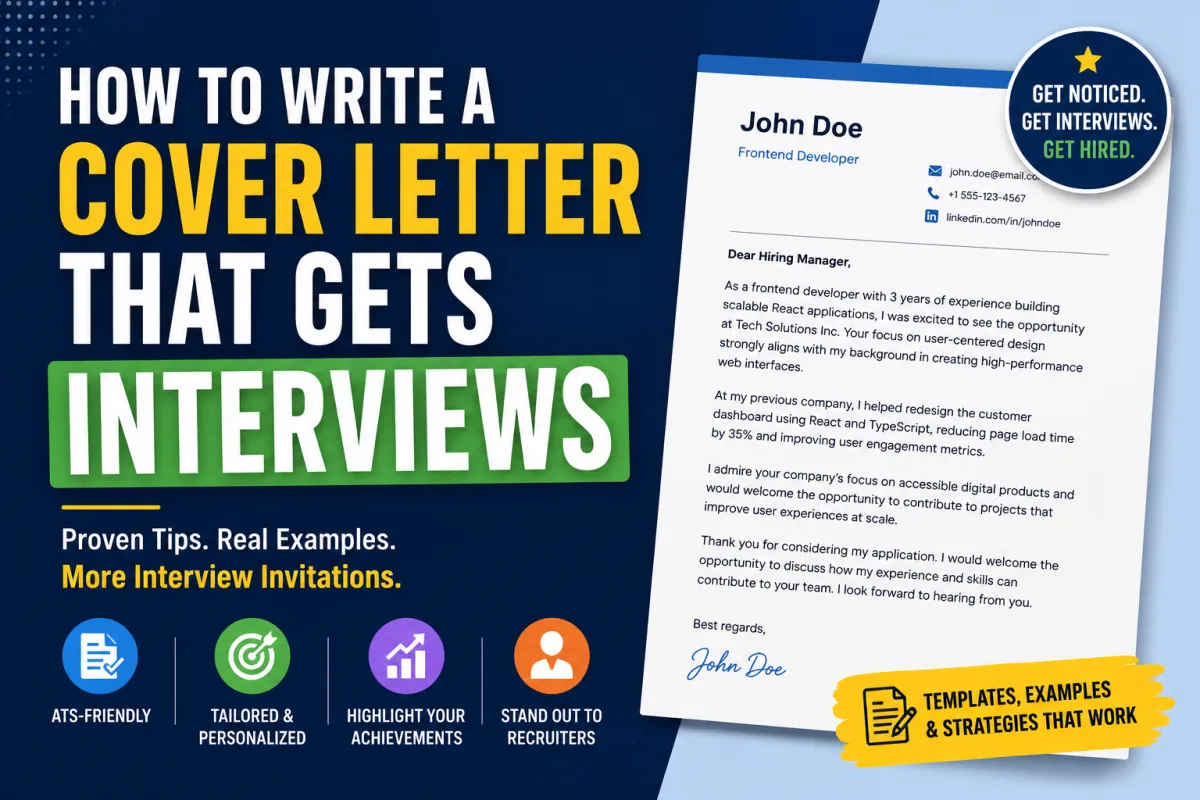
As a frontend developer with 3 years of experience building scalable React applications, I was excited to see the opportunity at Tech Solutions Inc. Your focus on user-centered design strongly aligns with my background in creating high-performance web interfaces.
3. Highlight Relevant Achievements
Do not repeat your resume word-for-word.
Instead, explain your most relevant accomplishments with context.
Weak Example
I worked with React and JavaScript.
Strong Example
At my previous company, I helped redesign the customer dashboard using React and TypeScript, reducing page load time by 35% and improving user engagement metrics.
Numbers and measurable impact make your application stronger.
4. Show Why You Want This Specific Job
Recruiters want candidates who genuinely care about the role.
Mention:
The company mission
The product
The industry
The team culture
The growth opportunities
Example:
I admire your company’s focus on accessible digital products and would welcome the opportunity to contribute to projects that improve user experiences at scale.
5. End With a Confident Closing
Your final paragraph should:
Thank the recruiter
Express interest in an interview
End professionally
Example:
Thank you for considering my application. I would welcome the opportunity to discuss how my experience and skills can contribute to your team. I look forward to hearing from you.
Then sign with:
Best regards,
John Doe
Common Cover Letter Mistakes
Avoid these mistakes that recruiters frequently reject:
Using Generic Templates
Recruiters can instantly spot copy-pasted letters.
Customize every application.
Making It Too Long
Your cover letter is not a biography.
Keep it focused and easy to scan.
Repeating the Resume
Your resume lists experiences.
Your cover letter explains impact and motivation.
Using Weak Language
Avoid phrases like:
“I think”
“I believe I may”
“Hopefully”
Use confident language instead.
Sending Without Proofreading
Grammar mistakes can ruin an otherwise strong application.
Always review carefully before submitting.
Best Cover Letter Tips for 2026
Optimize for ATS Systems
Many companies use Applicant Tracking Systems (ATS).
Include keywords from the job description naturally throughout your letter.
Personalize the Greeting
Instead of:
Dear Sir/Madam
Use:
Dear Hiring Manager
Or ideally:
Dear Sarah Johnson
if you know the recruiter’s name.
Match Your Resume Design
Consistency matters.
Using the same style, fonts, and colors as your resume creates a more professional application package.
Create Professional Cover Letters Faster With HResume
Writing a cover letter from scratch can take time — especially when applying to multiple jobs.
That’s why HResume.pro includes a professional cover letter builder designed to help job seekers create polished, modern cover letters in minutes.
With the HResume Cover Letter Builder, you can:
Create ATS-friendly cover letters
Use professional templates
Customize letters for different jobs
Match your resume design
Export your cover letter professionally
Links:
Whether you are applying for your first job or a senior role, having a professional cover letter can significantly improve your chances of getting interviews.
Final Thoughts
A cover letter is not just a formality.
It is your opportunity to explain your story, demonstrate value, and create a personal connection with recruiters before the interview even starts.
A strong resume gets noticed.
A strong cover letter gets remembered.
And together, they can dramatically improve your job search success in 2026.