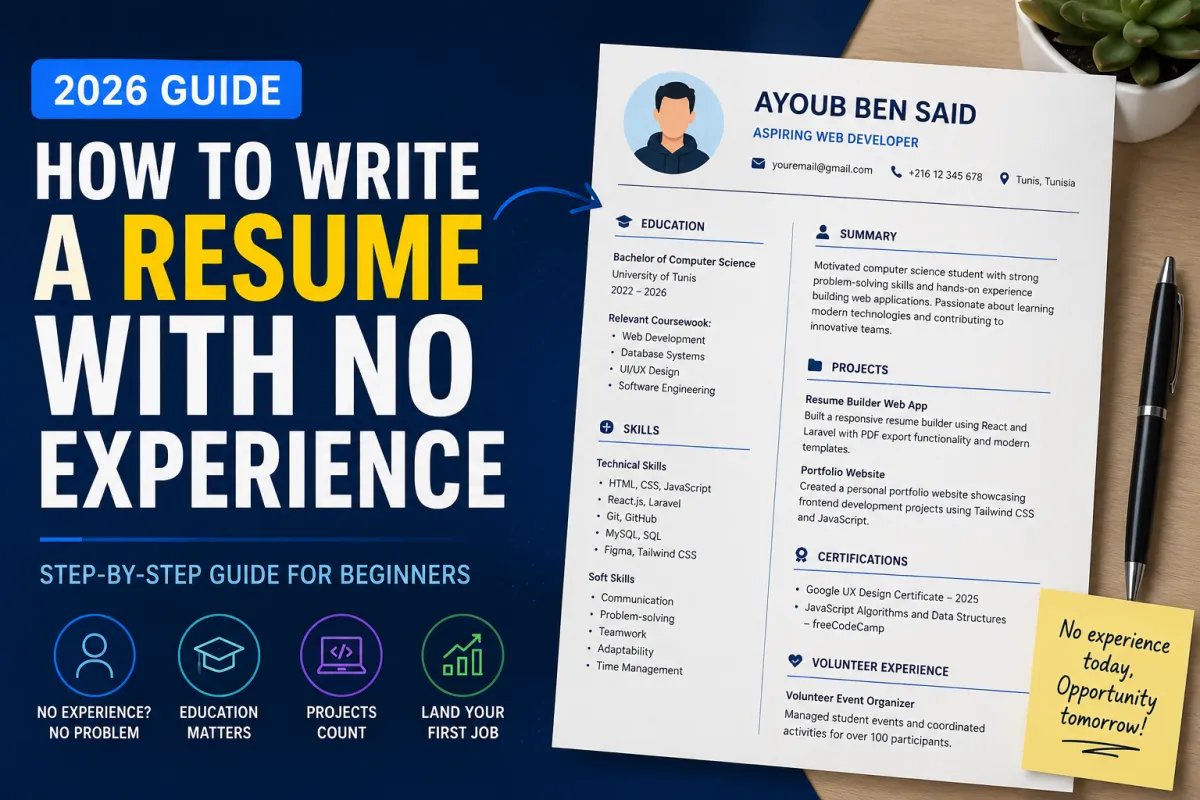
Getting your first job can feel impossible when every position asks for experience. The good news? Recruiters do hire candidates with no formal work history — if the resume is written the right way.
In this guide, you’ll learn how to create a professional resume with no experience in 2026, what recruiters actually look for, and how to stand out even as a beginner.
Whether you’re a student, recent graduate, or changing careers, this guide will help you build a resume that gets interviews.
Why Recruiters Still Hire Candidates With No Experience
Most companies are not only hiring experience.
They are also looking for:
motivation,
communication skills,
adaptability,
problem-solving,
and willingness to learn.
A well-structured resume can show all of those qualities even if you have never had a full-time job before.
Best Resume Format for Beginners in 2026
If you have little or no experience, use this structure:
Contact Information
Professional Summary
Education
Skills
Projects or Certifications
Volunteer Work or Activities
Languages
This format helps recruiters focus on your potential instead of your lack of experience.
1. Start With a Strong Professional Summary
Your summary is the first thing recruiters read.
Keep it short: 2–4 lines.
Example
Motivated computer science student with strong problem-solving skills and hands-on experience building web applications using React and Laravel. Passionate about learning modern technologies and contributing to innovative teams.
Tips
Mention your field
Mention your strongest skills
Show enthusiasm
Keep it specific
2. Focus on Education
When you have no work experience, your education becomes more important.
Include:
Degree or diploma
School or university name
Graduation year
Relevant coursework
Academic achievements
Example
Bachelor of Computer Science
University of Tunis — 2026
Relevant Coursework:
Web Development
Database Systems
UI/UX Design
Software Engineering
3. Add Skills Recruiters Actually Want
Recruiters in 2026 care about both technical and soft skills.
Technical Skills Examples
React
Angular
Laravel
Java
SQL
Figma
Git
Soft Skills Examples
Communication
Teamwork
Time management
Adaptability
Problem-solving
Only include skills you genuinely know.
4. Use Projects Instead of Job Experience
Projects are one of the best ways to prove your abilities.
Even personal or school projects count.
Example
Resume Builder Web App
Built a responsive resume builder using React and Laravel with PDF export functionality and modern templates.
Portfolio Website
Created a personal portfolio website showcasing frontend development projects using Tailwind CSS and JavaScript.
Projects demonstrate initiative and practical skills.
5. Include Certifications and Online Courses
Online learning matters more than ever in 2026.
Good platforms include:
Coursera
Udemy
freeCodeCamp
Google Career Certificates
LinkedIn Learning
Example
Google UX Design Certificate — 2025
JavaScript Algorithms and Data Structures — freeCodeCamp
6. Add Volunteer Work or Extracurricular Activities
Many beginners ignore this section.
Volunteer work shows:
responsibility,
leadership,
collaboration,
and communication skills.
Example
Volunteer Event Organizer
Managed student events and coordinated activities for over 100 participants.
7. Optimize Your Resume for ATS Systems
Many companies use Applicant Tracking Systems (ATS) to filter resumes automatically.
To make your resume ATS-friendly:
Use simple formatting
Avoid complex graphics
Use job-related keywords
Use clear headings
Save as PDF unless asked otherwise
Common Resume Mistakes Beginners Make
Using One Resume for Every Job
Always customize your resume for each application.
Adding Fake Experience
Recruiters can usually tell.
Writing Long Paragraphs
Keep descriptions short and readable.
Using Unprofessional Email Addresses
Use a professional email like: firstname.lastname@gmail.com
Example Resume Sections for a Beginner
Professional Summary
Short introduction highlighting goals and strengths.
Skills
Technical and soft skills relevant to the job.
Education
Degrees, coursework, achievements.
Projects
Personal, freelance, or school projects.
Certifications
Online courses and certificates.
Final Tips to Get More Interviews
Keep your resume to one page
Use clean and modern templates
Tailor your resume for each job
Add measurable achievements when possible
Proofread carefully
Remember: everyone starts somewhere.
A recruiter is not expecting 10 years of experience from an entry-level candidate. They are looking for potential, clarity, and effort.
Build a Professional Resume Faster
Instead of designing everything manually, you can use HResume.pro to create a modern, ATS-friendly resume in minutes using professional templates optimized for recruiters.
You can also explore more career tips on the HResume Blog.